Fast-Track DWTC LED Signage Permits: Prevent No‑Show Demos
DWTC LED signage permits are the single most critical administrative item for any LED demo at Dubai World Trade Centre. Miss the permit windows or submit incomplete engineering packs and you risk inspection holds, refusal to power equipment, or steep late-surcharge hires that stop your demo before it starts. In the compressed May cluster around Arabian Travel Market (ATM, 4–7 May 2026) and Seamless Middle East (12–14 May 2026), fast-track permit planning is not optional — it’s a project deliverable.
Why LED signage causes the most no‑show demos at DWTC — a technical breakdown (DWTC LED signage permits)
DWTC rule enforcement is technical and strict. LED signage triggers the most on-site failures because it combines structural, electrical and content compliance in one package:
- Structural complexity: Ceiling‑hung or suspended LED requires stamped structural calculations, spreader plates and certified rigging equipment. Incomplete engineer packs are the top single failure mode.
- Electrical compliance: PAT testing, fused PDUs and venue‑approved cabling are inspected on arrival. Unapproved transformers or non‑PAT PDUs are rejected at the gate.
- Operational load & 24‑hour power: Continuous power must be ordered separately and requires accurate load calculations — late or incorrect orders lead to emergency hires and surcharges.
- Content & AV restraint: Brightness limits, sound restrictions and content clearances are checked for any public broadcasting elements.
Put simply: an LED screen that looks right visually can still fail because of missing stamped loads, incorrect PDUs or late MEP orders.
DWTC permit calendar & deadlines you cannot miss (DWTC LED signage permits)
Understanding the calendar is the fastest way to avoid penalties during the May cluster. DWTC enforces strict submission windows:
- Rigging permits & stamped structural calculations: Typically required 21–30 days before show build. This applies to any ceiling‑hung or suspended LED.
- Electrical/MEP orders & 24‑hour power: Close approximately 14–30 days before show; note that 24‑hour power must be ordered separately.
- On‑arrival inspections: PAT testing, fused PDUs and venue‑approved cabling are inspected at handover.
Miss these windows during ATM/Seamless May cluster and you’ll face steep surcharges (reported 20–100%), inspection holds, or outright refusal to power equipment — all common causes of demo failures.
Engineering checklist for LED screens — weight, spreader plates, stamped calculations and approved rigging (DWTC LED signage permits)
Every LED installation for DWTC should be validated against a concise engineering checklist we use on all projects:
- Dead load per cabinet: Provide cabinet dimensions and weight per unit (include connector and frame weight). Typical rental cabinets vary; submit manufacturer data sheets.
- Point loads & spreader plates: Identify rigging points and specify spreader plates. We recommend steel spreader plates sized to distribute point loads across the venue’s soffit — include plate material, thickness and dimensions in the pack.
- Lift method & approved rigging gear: Certified shackles, slings and shackles with SWL (safe working load) shown; include third‑party rigging company details if using external suppliers.
- Stamped structural calculations: Engineer‑stamped load calculations that match the actual rigging layout (DWTC will not accept generic loads).
- Electrical load schedule: Break down per cabinet, control racks and ancillary systems; include fused PDUs, breaker sizing and in‑line protective devices.
We assign project managers to coordinate the full engineered pack and ensure the DWTC submission includes all required drawings, calculations and RAMS.
Pre‑show validation: how Burdak’s full‑scale warehouse mock‑ups and PAT‑tested AV racks prevent rework (DWTC LED signage permits)
We eliminate site surprises before trucks leave our Al Quoz facility. Our pre‑show validation process includes:
- In‑house fabrication & CNC accuracy: Full control over frame tolerances and fixtures reduces site adjustments. Fabrication in Al Quoz ensures parts match approved drawings.
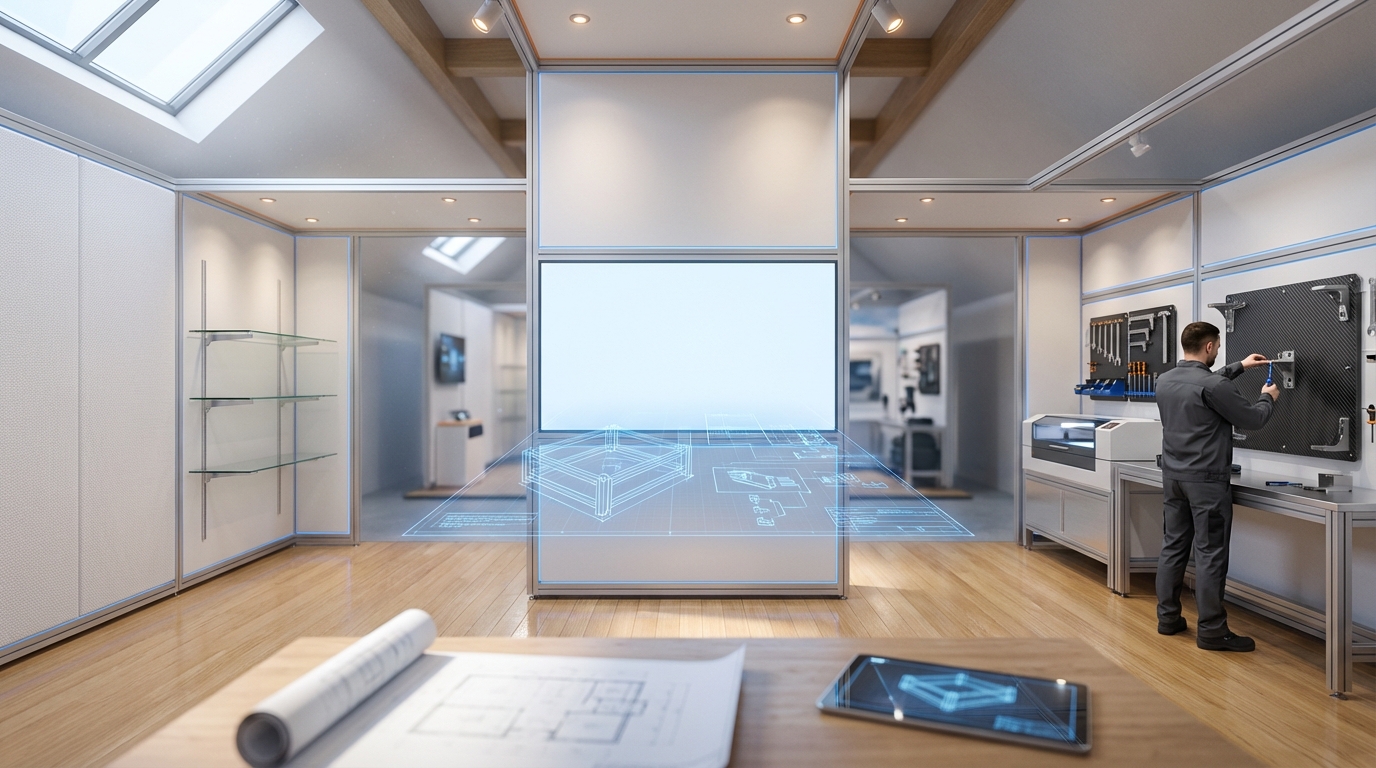
- Full‑scale 3D mockups and physical build‑offs: We assemble full stands or suspended sets in our warehouse so fit, sightlines and rigging interfaces are verified before shipping.
- PAT‑tested AV racks and fused PDUs: All racks are PAT‑tested, labelled and logged; PDUs are fused and configured to DWTC‑approved cabling standards so on‑arrival inspections pass consistently.
- Pre‑site load validation: We run power and load tests, QR‑tag components and include stamped calculation cross‑references with the submitted engineer pack.
That combination cuts the three recurring failure modes DWTC sees: incomplete engineer packs, non‑PAT racks, and late MEP orders that force costly hires.
On‑site playbook and contingencies — RAMS, rapid spares, transport, and guaranteed on‑stand tech support (DWTC LED signage permits)
On‑site readiness reduces downtime during the critical show run:
- RAMS & Inspector liaison: We deliver complete risk assessments and method statements (RAMS) and maintain a single point of contact for DWTC inspections to speed approvals.
- Rapid spares kit: Common module spares, control cards, spare PDUs and a tested replacement AV rack are shipped with every project to avoid rental hires at premium rates.
- Transport & logistics: Dedicated transport plans from Al Quoz to DWTC with build schedules aligned to DWTC handover windows — essential during the May cluster.
- Guaranteed on‑stand tech support: We provide on‑stand engineers for the full show duration to manage load balancing, PAT rechecks and content issues.
FAQ
- Q: When must I submit rigging permits for DWTC events?
A: Rigging permits and stamped structural calculations are typically required 21–30 days before build. For the May cluster (ATM and Seamless) submit at the earliest possible date to avoid review delays.
- Q: What is PAT testing and why is it mandatory?
A: PAT stands for Portable Appliance Testing. DWTC inspects PAT‑tested AV racks and fused PDUs on arrival — non‑PAT equipment is commonly refused connection.
- Q: What happens if I miss the electrical/24‑hour power deadline?
A: Electrical/MEP windows close ~14–30 days pre‑show and 24‑hour power is ordered separately. Missing them often forces hires from venue contractors at reported surcharges of 20–100% or leads to power refusal.
- Q: How does Burdak reduce the risk of demo failure?
A: We use in‑house Al Quoz fabrication, CNC‑accurate parts, full‑scale 3D mockups, PAT‑certified AV racks and project managers who coordinate stamped calculations and RAMS. That combination prevents connection refusals and inspection holds.
- Q: Are there content or brightness limits at DWTC?
A: Yes. DWTC restricts sound and brightness and often requires content clearances for public broadcasting. We handle content checks as part of our final pre‑site validation.
For ATM and Seamless in May 2026 — with ~2,800 exhibitors at ATM and ~750 at Seamless — the approval windows are compressed and contractor capacity is constrained. Contact us for a 24–48h quote, stamped submissions coordination, and guaranteed on‑stand support to fast‑track your DWTC LED signage permits and protect your demo investment.