Stop DWTC Power Trips with Factory Inrush Testing
Exhibition power inrush testing Dubai is the single best prophylactic against DWTC/DEC breaker trips, late energisation and demo failures during the January–May mega‑cycle. We at Burdak Technical Services routinely replicate full stand builds in our factory, run inrush profiling and deliver DWTC‑ready documentation so your build energises on time and without surcharges.
Why Power‑Inrush Is the Silent Show‑Stopper — Exhibition power inrush testing Dubai
Inrush current is the short, high amplitude current drawn when equipment is first energised. Common culprits on exhibition stands include:
- LED walls and LED driver banks (initial caps charging)
- Motorised demos, conveyor drives and actuators
- Compressors and refrigeration units (start‑motor peaks)
- Large PSU/AV racks and power amplifiers
These devices can draw 40–100× their steady‑state current at startup. At DWTC/DEC this behavior routinely trips standard breaker types unless the installation uses sequencing, inrush limiters, soft‑starters or motor‑grade protection such as Type‑D breakers.
Real‑world effects are immediate: breaker trips during marshalling, delayed energising that pushes commissioning into paid overtime windows, and demo cancellations that damage exhibitor reputation and ROI. In our experience, late power orders and untested rigs commonly drive 20–50% surcharges and lost demo hours for exhibitors who arrive unprepared.
DWTC/DEC Electrical Rules Every Exhibitor Must Know — Exhibition power inrush testing Dubai
DWTC and the Dubai Exhibition Centre enforce specific rules that directly affect mitigation of inrush risks:
- All electrical orders go through EventPlus with early/standard/late windows and tiered pricing; late orders are often subject to availability and attract 20–50% surcharges.
- Three‑phase power is delivered on IEC/CEE connectors (32A/63A/125A). Plan connector types and adaptors in advance.
- 24‑hour power is a separately charged service — critical for demos requiring overnight readiness.
- Venue electrical inspection and mandatory sign‑off is required before energising; tall LED walls or heavy AV (commonly >2.5m) trigger additional structural and RAMS checks.
- Non‑compliance or late technical specs can lead to denied connections, additional venue fees or forced rework on site.
The Burdak Factory Inrush‑Testing Playbook (Step‑by‑Step) — Exhibition power inrush testing Dubai
Our process is engineered to prevent DWTC power events and secure inspector sign‑off the first time.
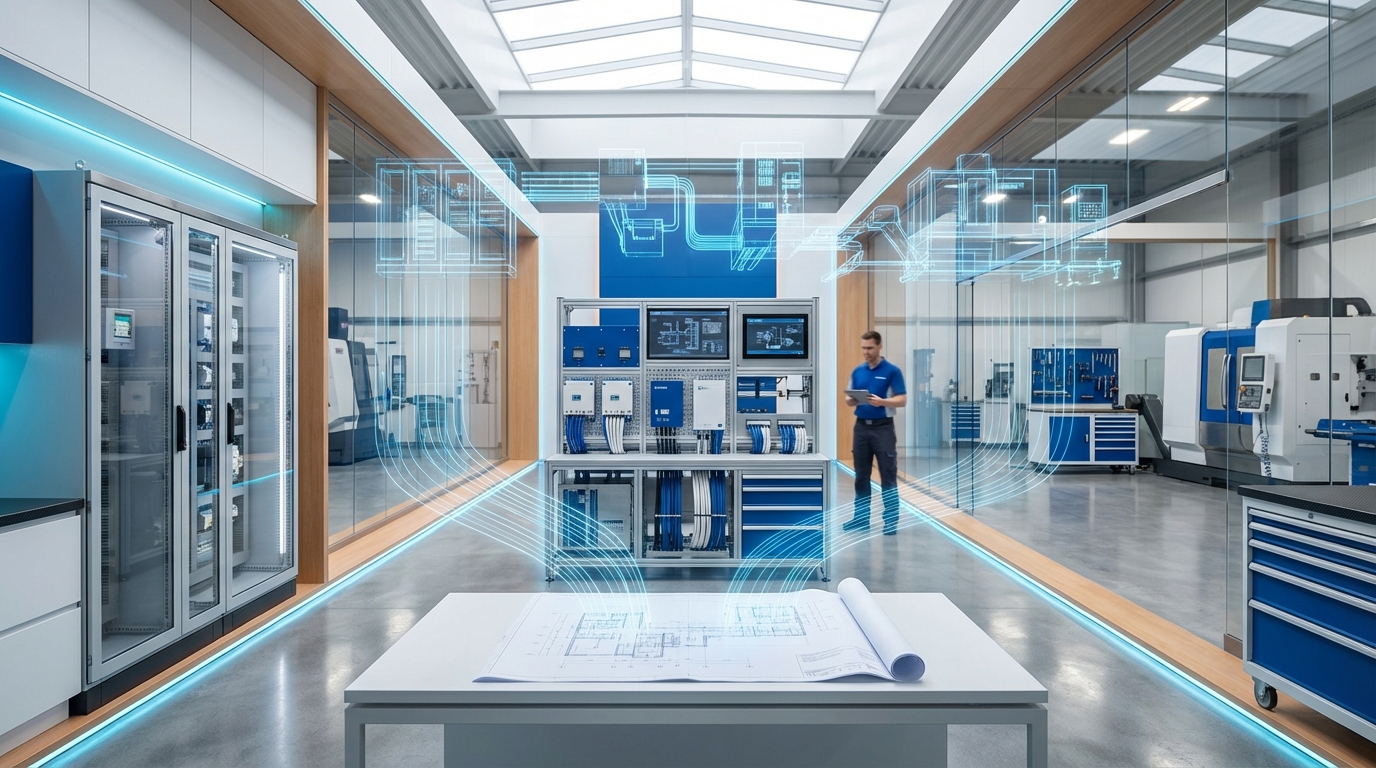
1. Full‑scale pre‑assembly mock‑up
We fabricate stands in‑house using CNC joinery and fit them to full scale in our factory. The 3D mockups allow us to install final cable runs, connector panels and the exact AV/LED hardware for accurate testing.
2. Electrical lab tests and inrush profiling
- Measure start‑up peaks for each device and the assembled bank using calibrated meters.
- Run sequencing trials to determine safe energisation order (LED banks, POS, demo machines).
- Evaluate and fit soft‑starters, inrush limiters and Type‑D breaker recommendations where appropriate.
3. On‑site readiness deliverables
We produce DWTC/DEC‑ready documentation and controlled packaging to streamline venue inspection and installation:
- Single‑line power diagrams and labelled terminal schedules
- Shop drawings and 3D elevations for structural/LED sign‑off
- RAMS (Risk Assessment Method Statements) and inspector test certificates
- Labelled staging packs and a marshalling slot plan to speed install
Case Scenarios & Measured Savings (Gulfood, Seamless, WHX) — Exhibition power inrush testing Dubai
The January–May calendar (Gulfood, WHX, Middle East Energy, Seamless) compresses builds, so last‑mile failures multiply quickly. Here are representative cases from our projects:
Seamless — LED wall + POS bank
Issue: simultaneous energisation of a 6m LED wall and POS power bank tripped venue circuits during load‑in. Solution: pre‑test sequencing and fitted inrush limiters. Result: prevented three breaker trips, removed need for emergency venue electrician overtime and protected live demos.
Gulfood — Refrigeration + demo machinery
Issue: refrigeration and motorised demo equipment created high start peaks that required extended on‑site commissioning and late 24‑hour power rental. Solution: factory fitted soft‑starters and Type‑D protection. Result: on‑site install time cut by ~45% and the client avoided late 24‑hour power charges and associated surcharges.
Cost comparison and ROI
- Market vendors often charge a 10–30% premium for last‑mile power and AV fixes.
- Burdak’s pre‑test package reduces rework and overtime, delivering strong ROI by eliminating surcharge risk and demo losses; pre‑assembly commonly reduces on‑site hours by 40–60%.
Pre‑Show Checklist & Timeline for Busy Exhibitors — Exhibition power inrush testing Dubai
Plan against the DWTC/DEC timelines below to avoid price tiers and inspection delays.
8‑week window
- Confirm power schedule in EventPlus and reserve required IEC/CEE connector types (32A/63A/125A).
- List peak inrush devices and provide equipment datasheets.
- Submit initial single‑line and RAMS for tall LED or heavy AV elements (>2.5m).
4‑week window
- Schedule Burdak full‑scale mock‑up and inrush tests in our factory.
- Order 24‑hour power and hardline internet early (DWTC hardline LANs typically 10Mbps at US$500–$800 if ordered on time).
2‑week window
- Receive test certificates, labelled crates and the marshalling slot plan.
- Final sign‑offs and contingency plan: sequenced energisation procedure and spare soft‑starter on call.
Call to action: With in‑house fabrication, CNC joinery and guaranteed 3D mockups, Burdak gets your rig inspector‑ready. Contact us to book a factory inrush test and secure on‑time energisation for Gulfood, WHX, Middle East Energy and Seamless.
FAQ — Exhibition power inrush testing Dubai
- What is inrush testing and why is it necessary? Inrush testing measures start‑up current peaks for every device on a stand. It identifies sequences and protection strategies to prevent DWTC breaker trips.
- Do I need a soft‑starter or a Type‑D breaker? Many motorised and refrigeration demos benefit from soft‑starters. Where high short‑duration peaks occur, we recommend Type‑D or motor‑grade protection—decided after factory profiling.
- How long does a factory mock‑up take? Typical full‑scale assembly and testing is scheduled within the 4‑week pre‑show window; the physical mock‑up and tests usually complete within 2–5 working days depending on scope.
- Will DWTC accept your test certificates? Yes. We deliver DWTC/DEC‑ready single‑line diagrams, RAMS and test certificates designed to satisfy the venue electrical inspection team.
- What savings can exhibitors expect? By avoiding late power surcharges and overtime, clients commonly avoid 10–30% vendor premiums and reduce on‑site build time by 40–60%, protecting demo revenue and brand experience.