
Avoid DWTC Sound Fines: Acoustic Booth Strategies
As an exhibitor at Dubai World Trade Centre events, understanding DWTC exhibitor noise limits is critical during the high‑risk May–June cluster. We outline clear, practical acoustic booth strategies to prevent on‑stand shutdowns, protect demos and keep your ROI intact.
Why DWTC exhibitor noise limits matter now — May/June cluster risks and real consequences
The immediate DWTC calendar increases inspection pressure: Arabian Travel Market (DWTC, 4–7 May 2026) hosts ~2,600–2,900 exhibitors; Seamless Middle East (DWTC, 12–14 May 2026) roughly 750 exhibitors; and The Hotel Show (early June 2026) adds ~900 exhibitors. These overlapping dates compress technical services and heighten local complaints, making spot checks and shutdowns more frequent.
Real consequences we regularly handle:
- Immediate on‑stand volume reduction or silence demanded by organisers.
- Emergency redesigns or removal of loud equipment — lost demo time and higher labour costs.
- Reputational and contractual impacts, especially for product launches or paid demos.
We’ve seen exhibitors arrive without pre‑testing and face same‑day shutdowns that stop demos for hours — a critical loss when footfall is highest.
The rules decoded — DWTC exhibitor noise limits explained
DWTC enforces a strict nuisance policy with a practical cap around 80 dB(A) measured at the stand boundary. The operative enforcement test is whether the sound interferes with normal conversation — if it does, organisers can require immediate reduction.
- Measurement point: stand boundary or nearest neighbouring stand.
- Decibel threshold: ~80 dB(A) practical guideline; DWTC discretion applies.
- Permits: Live bands, loud machinery or high SPL demos often require prior technical approval.
- Consequences: On‑site shutdown, written warnings, or mandatory tech corrections.
Top exhibitor mistakes that trigger complaints — common case studies and costs
Common failures we’ve documented across multiple shows:
- Outsourced audio without liaison: Booth builders supply PA systems but don’t pre‑test in situ.
- No pre‑testing: Exhibitors only measure sound after setup, when it's too late.
- Incorrect speaker placement: Rear‑firing speakers directed at aisles elevate boundary SPLs.
- Missing approvals: Loud demos or machinery not declared in technical submissions.
Measurable costs of a shutdown typically include: lost demo revenue, emergency fabrication (AED 3,000–20,000+), additional labour and transport, and potential penalties. The total often exceeds the cost of a pre‑show acoustic retrofit.
Acoustic design solutions that pass DWTC inspection — a layered approach
We recommend a layered acoustic strategy combining absorption, isolation, glazing and sympathetic AV choices. Key measurable solutions:
- Absorption: 50–100mm mineral wool behind perforated facings or 12mm acoustic foam where sightlines allow.
- Isolation: Decoupled partitions using staggered studs and 12.5mm fire‑rated plasterboard each side with resilient channels for improved STC.
- Glazed acoustic partitions: Laminated glass or laminated acoustic glazing with a minimum weighted sound reduction index (Rw) target of 30–40 dB for small booth partitions.
- Low‑profile speaker systems: Column or boundary speakers aim sound towards the booth centre; keep speakers at least 1.5–2m from the stand boundary and use directional coverage patterns.
- Sightline‑friendly treatments: Perforated CNC panels, acoustic fabrics and integrated planters that blend absorption with brand aesthetics.
How Burdak solves it (in‑house fabrication + mock‑up process) — DWTC exhibitor noise limits handled end‑to‑end
We convert risk into an auditable deliverable using our in‑house capabilities:
- CNC acoustic panels & glazed/acoustic partitions: Fabricated under quality control to specified thicknesses, finishes and elemental STC targets.
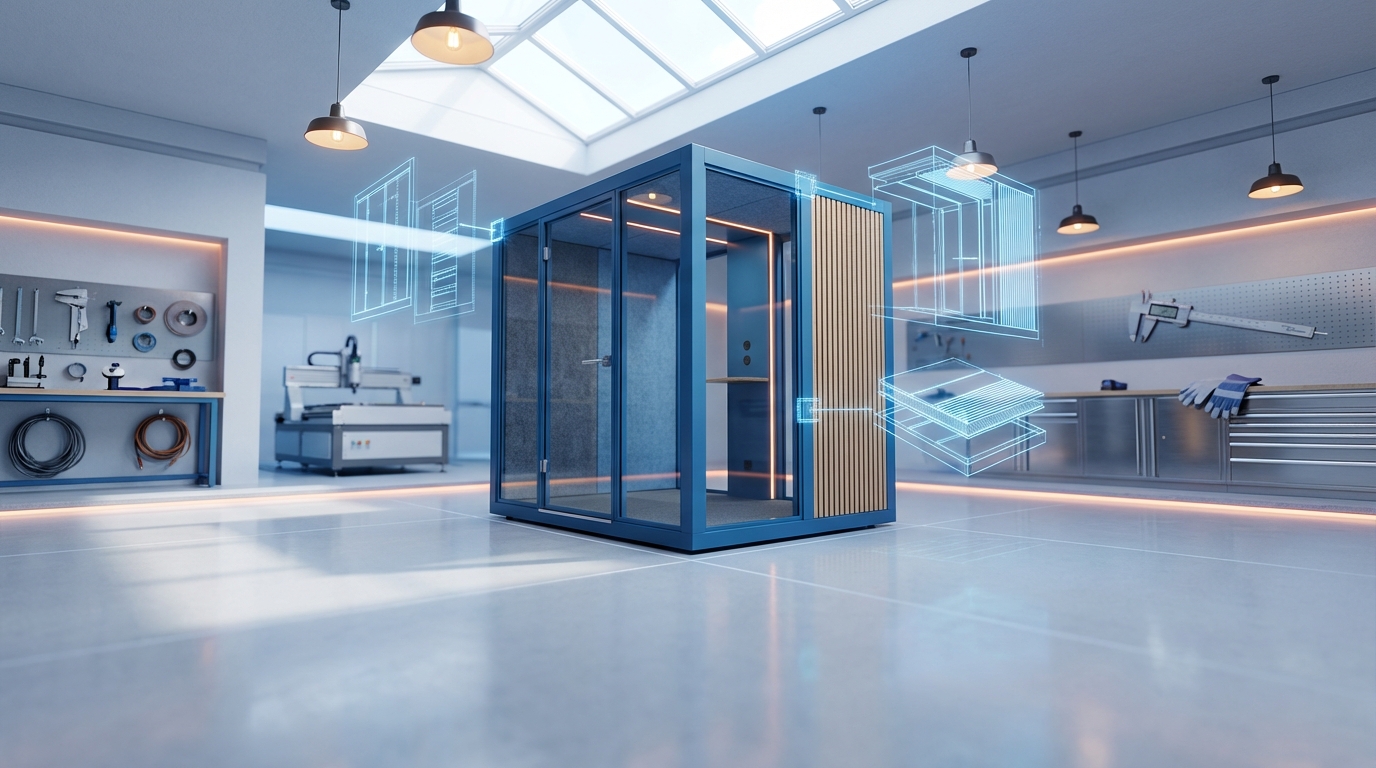
- Full‑scale warehouse decibel mock‑ups: We assemble the booth or critical elevation and run live demos at operational levels, recording decibel logs at the boundary.
- PAT & AV pre‑testing: Electrical PAT testing plus AV load‑testing avoids device trips and accidental SPL spikes.
- Standardised decibel log for approval packs: We supply time‑stamped dB(A) charts and operator declarations for DWTC technical submissions and on‑site inspectors.
This in‑house route shortens timelines, retains quality control and lets us respond within DWTC’s compressed inspection window.
Pre‑show checklist & on‑site playbook — actionable items for compliance
Use this checklist as your minimum standard before shipping to DWTC:
- Decibel metre calibration: Calibrate meters within 12 months and log certificate reference.
- RAMS & technical submission templates: Include declared SPLs, demo schedules and equipment lists.
- Neighbour‑friendly content schedule: Limit loud demos to set windows, and inform adjacent stands.
- Rapid on‑stand adjustments: Have inline attenuators, spare acoustic panels and directional speaker mounts ready.
- Emergency mute procedure: Operator button or AV feed bypass that immediately silences demos; keep a printed procedure on‑stand.
We provide templated RAMS and a pre‑filled technical submission pack so you can submit approvals on time.
Quick ROI case — DWTC exhibitor noise limits: shutdown cost vs Burdak retrofit
Case summary (example): a mid‑size launch booth faced a shutdown at Seamless with two hours of lost demo time, emergency labour and an emergency board‑up. Immediate on‑site costs were ~AED 12,500 plus potential lost sales and reputational impact. Burdak’s acoustic retrofit and warehouse mock‑up for similar booths typically cost AED 4,000–9,000 depending on scope. The preventative spend covered:
- Full‑scale decibel mock‑up and report.
- Fabrication of perforated CNC acoustic panels and a glazed acoustic partition.
- AV pre‑testing and standardised decibel log for DWTC approval.
Result: no shutdown, uninterrupted demos and a clear audit trail for organisers — the retrofit paid for itself within a single event day when compared to loss and emergency fees.
Call to action: We offer 24–48h quotes and mock‑up bookings for high‑risk shows. Contact us to schedule a decibel mock‑up and approval pack.
FAQ: DWTC exhibitor noise limits
Q: What exact dB level will DWTC accept?
A: DWTC applies a nuisance test; aim for ≤80 dB(A) at the stand boundary and document it. Final enforcement is at organiser discretion.
Q: Do I need prior approval for a loud demo?
A: Yes — live bands, machinery and any demo above normal conversational levels should be declared in technical submissions and approved in advance.
Q: Can outsourced builders handle acoustic compliance?
A: They can, but we commonly see failures where builders don’t pre‑test. We recommend in‑house fabrication and a mock‑up to guarantee results.
Q: What does Burdak include in a mock‑up?
A: CNC acoustic panels, glazed partition elements, live AV testing at operational levels, PAT testing and a stamped decibel log for approvals.
Q: How fast can Burdak respond?
A: We provide 24–48h quotes and can schedule warehouse mock‑ups quickly for shows in the May–June cluster.