DUPHAT 2026 Cold‑Chain & Compliance Survival Guide
DUPHAT 2026 Cold‑Chain & Compliance Survival Guide
As trusted DUPHAT exhibition stand builders Dubai, we prepared this technical survival guide to protect temperature‑sensitive samples, secure DWTC approvals and eliminate costly on‑site fixes at DUPHAT (24–26 March 2026, Dubai World Trade Centre). With 1,300+ exhibitors and 26,000–32,000 professional visitors, procurement teams and regulators expect pharmaceutical standards—so cold‑chain integrity, RAMS compliance and booked loading slots are non‑negotiable.
Why DUPHAT 2026 Demands a Technical‑First Stand Strategy — DUPHAT exhibition stand builders Dubai
DUPHAT is a high‑risk, high‑visibility event: visitors are largely procurement, distributors and regulators. That audience profile, together with the scale (multiple halls at DWTC: Sheikh Saeed/Halls 1–8), makes technical resilience essential.
- Cold‑chain integrity: WHO GDP‑style handling is expected on site. Any lapse (power cut, poor installation) risks sample loss, fines and reputational damage.
- RAMS compliance: DWTC enforces RAMS ~30 days before build (estimated deadline: 24 Feb 2026). Incomplete RAMS can block build access.
- Loading & MEP slots: Event Plus bookings for loading‑bay slots and early electrical/rigging orders prevent 20–50% surcharges for late orders and avoid crate rejections.
Key DWTC Rules Every Pharma Exhibitor Must Know (Dates, Deadlines, Permits) — DUPHAT exhibition stand builders Dubai
Understand deadlines and paperwork to protect samples and schedules.
Dates, venue and build‑up windows
- Event dates: 24–26 March 2026 at Dubai World Trade Centre (Sheikh Saeed/Halls 1–8).
- Build windows: Estimated build‑up varies by stand type. Space‑only stands commonly need 4–6 days; shell scheme builds may be 2–3 days. Coordinate with organisers and your contractor early.
RAMS deadline & contents
DWTC requires RAMS submission approximately 30 days before build (estimated cutoff: 24 Feb 2026). A compliant RAMS must include:
- Site‑specific Risk Assessment and detailed Method Statement.
- Names, qualifications and licences of contractors (electrical, rigging, gas).
- MEP schematics showing dedicated circuits for 24‑hour fridges (amperage, outlet locations), skid plates and load calculations.
- Emergency procedures, fire‑safety plan and waste disposal method.
- For hazardous items: COSHH details, cylinder storage and qualified installer statements.
Power, electrical licensing and surcharges
- 24‑hour power: Mandatory for temperature‑controlled fridges; standard power is cut after exhibition hours unless 24‑hour lines are ordered.
- Dedicated circuits: Fridges commonly require dedicated 32A or 63A circuits—specify amperage in RAMS/MEP.
- Electrical contractor licensing: Only DWTC‑approved electricians/contractors accepted; include licences in RAMS.
- Late order penalties: Late electrical/rigging orders typically carry a 20–50% surcharge—plan for early booking.
Health authority notifications and gas permits
- DHA/MOHAP sample notifications or NOCs are mandatory where applicable—submit early to avoid embargoed displays.
- Hazardous and medical gas cylinders require Civil Defence approval and certified installers; include permits in RAMS.
The Top Exhibitor Pain Points at DUPHAT — Real Examples
- Paperwork failures: Incomplete RAMS or missing contractor licences blocking hall access until corrected.
- Cold‑chain failures: Exhibitors arriving without dedicated 24‑hour lines, fridges on shared circuits, poor fridge installation and no temperature logging—result: sample spoilage.
- Logistics delays: Missed Event Plus loading‑bay slots, oversized crates turned away, and last‑minute on‑site fixes from outsourced builders.
- Cost impacts: On‑site rework, emergency official handler hires and late‑order surcharges (20–50%) inflate budgets dramatically.
How Burdak Solves DUPHAT's Top Risks — Technical Playbook
We mitigate risk through integrated technical services designed for DWTC and DUPHAT specifics.
In‑house fabrication & materials
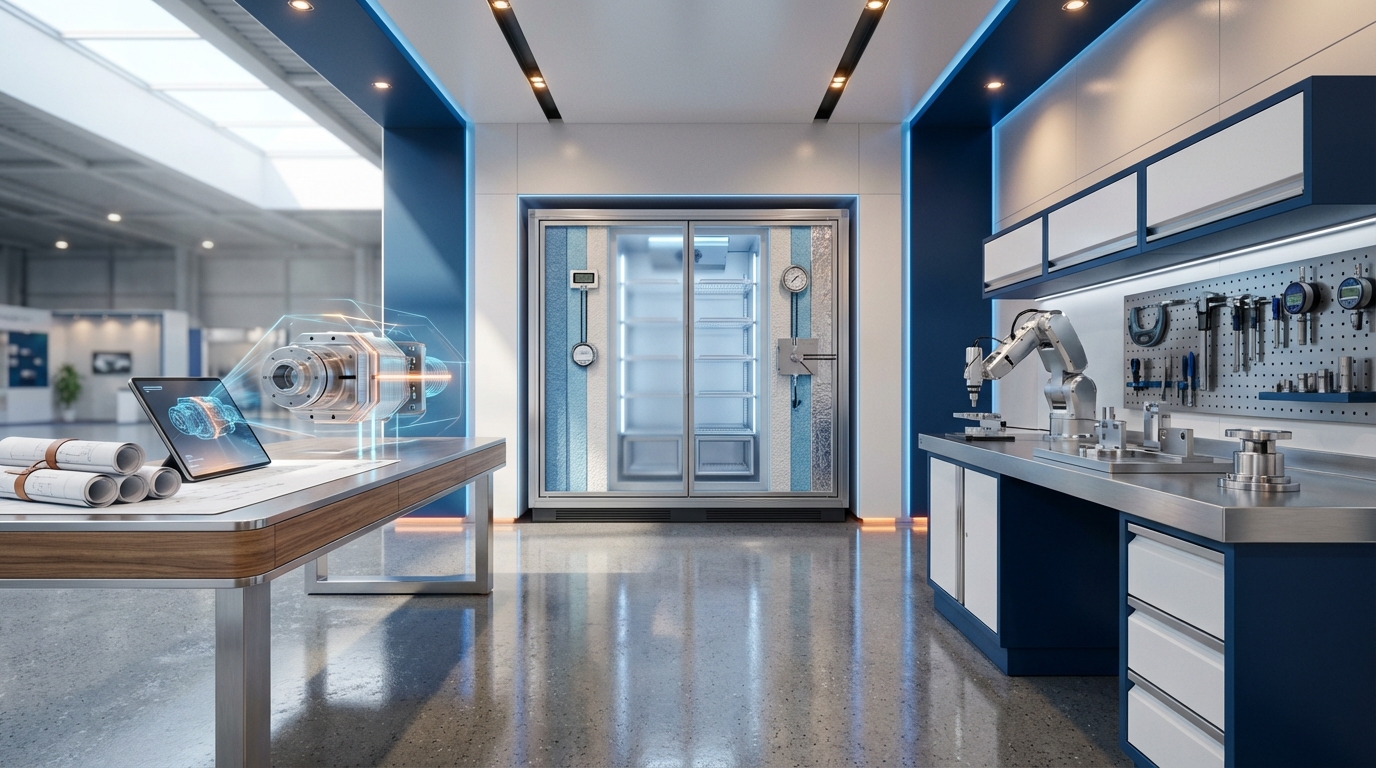
- We use CNC precision fabrication for consistent tolerances, load‑bearing skid plates and accurate MEP integrations.
- Materials selected to meet DWTC rules: lightweight aluminium framing, fire‑rated panels and FR fabrics; we avoid banned single‑use materials and non‑compliant finishes.
- QA checks in‑house ensure fit, finishes and mechanical clearances before any transport.
Warehouse mock‑ups & client sign‑off
Full‑scale mock‑ups in our warehouse allow client walkthroughs and fit checks. We validate:
- Fridge footprint and skid plate alignment.
- Electrical outlet locations and cable containment routes.
- MEP integration (airflow, access panels, temperature probe placement) with client sign‑off before transport.
RAMS & MEP coordination
- We prepare and submit RAMS ~30 days out, include certified contractor licences and full MEP schematics.
- We liaise with Civil Defence, DHA and organisers for medical gas permits and sample notifications when required.
- We book 24‑hour power and rigging early to avoid late surcharges.
Logistics & on‑site team
- We book Event Plus loading slots, coordinate white‑glove freight, and manage crate dimensions to DWTC limits.
- An assigned on‑site project manager supervises install, ensures temperature logging is live, and eliminates late fixes.
Actionable 30‑Day Checklist for Pharma Exhibitors (Timeline + Burdak Services)
- 30+ days out: RAMS submission (we can prepare and submit); final design sign‑off; confirm cold‑chain specs (fridge models, dedicated amperage).
- 21–14 days out: Order electrical/24‑hour power and rigging; follow up on DHA/MOHAP notifications and Civil Defence permits; arrange warehouse mock‑up review with Burdak.
- 7 days out: Confirm freight & Event Plus loading slots; client sign‑off on mock‑up; pack spare parts, temperature probes and contingency components.
- On the day: Burdak on‑site supervision, temperature logging setup (continuous digital logs), and rapid response protocols for power or MEP faults.
Case Study Snapshot & ROI — Avoiding a Cold‑Chain Disaster
Template example:
- Problem: Client arrived with an outsourced stand missing a 24‑hour power booking and incomplete RAMS; fridges were on shared circuits.
- Burdak solution: Rapid warehouse mock‑up, re‑wired fridge skid to dedicated 63A circuit, pre‑booked mains and obtained Civil Defence permit for medical gas. RAMS resubmitted and accepted.
- Outcome: Zero sample loss, no fines, and reduced on‑site install hours by 40%.
Rough cost vs risk: Burdak offers 24–48h quoting. Typical last‑minute electrical or handler surcharges range from 20–50% of base costs; avoiding one surcharge on a mid‑range project (AED 5,000–15,000) often pays for pre‑planning, mock‑up and a single on‑site PM.
FAQ
- Q: What is the RAMS deadline for DUPHAT 2026? A: DWTC requires RAMS ~30 days before build; estimated deadline 24 Feb 2026.
- Q: Is 24‑hour power compulsory for fridges? A: Yes—temperature‑controlled fridges must be on dedicated 24‑hour lines; order through DWTC early.
- Q: Who handles loading‑bay bookings? A: Event Plus handles loading‑bay slot bookings; we manage this for clients to guarantee arrival windows.
- Q: What permits are needed for gas cylinders? A: Civil Defence approval and certified installers are mandatory for hazardous/medical gases; include permits in RAMS.
- Q: How quickly can Burdak respond? A: We provide 24–48h quotes, run warehouse mock‑ups and assign on‑site PMs to eliminate late fixes.
For technical stand builds at DUPHAT, early planning is the only reliable strategy. We combine in‑house fabrication, 3D mock‑ups and RAMS/MEP management to protect samples, timelines and budgets. Contact us to secure your timeline and the right technical safeguards for DUPHAT 2026.