
Avoid DWTC Double-Deck Delays at Dubai Derma — Practical Guide for DWTC double deck stand builders
Avoid DWTC Double-Deck Delays at Dubai Derma — Guidance for DWTC double deck stand builders
DWTC double deck stand builders must plan earlier and with greater detail for Dubai Derma 2026. With ~25,000 attendees and reported post-show deals near AED 2.5bn, exhibitors favour double-deck builds for product demos, private meeting space and high-value visibility. We outline the DWTC complex-structure rules you need, common failures and exact corrective workflows we use at Burdak Technical Services — including our in-house fabrication and 3D/full-scale mock-ups that prevent costly last-minute delays.
Why Dubai Derma 2026 makes double-deck stands attractive — DWTC double deck stand builders perspective
Dubai Derma draws a professional audience: dermatologists, procurement teams, distributors and hospital buyers. Key reasons exhibitors choose double-deck stands:
- Product demo needs: Dedicated demo theatres and private consultation rooms above a high-traffic ground area.
- Visibility per sqm: A double-deck increases rentable display frontage and sightlines — raising perceived value per sqm for costly DWTC space.
- Meeting capacity: Private upstairs meeting rooms preserve floor-level flow and convert leads into high-ticket deals.
For DWTC double deck stand builders this translates to design priorities: clear sightlines, robust structural support, stair placement that meets circulation and fire rules, and compliance with DWTC transparency and accessibility policies.
DWTC Complex-Structure rules explained — essentials for DWTC double deck stand builders
DWTC treats anything above the single-storey limit as a Complex Structure. Key rules we apply for Dubai Derma:
- Height thresholds: Standard single-storey max ~4m; double-deck commonly permitted up to ~6m (varies by hall — check hall-specific guidance during booking).
- Structural documentation: Full structural calculations and engineered drawings signed by a certified structural engineer are mandatory.
- Transparency: A 50% transparency requirement on aisle-facing upper-level walls — measured as open area vs wall length.
- Base plate & non-drilling: DWTC typically requires base plates (commonly 400x400x12mm) and a no-drilling policy into floor slabs; fixings must use approved weights or base plates.
- Stairs & handrails: Stairs must meet DWTC riser/tread dimensions, have certified handrails and fall-protection to local code.
- Ramps & accessibility: Any raised floor above 12mm requires ramp access compliant with accessibility guidelines and slope limits.
- Rigging & services: Rigging requires separate orders and approval; electrical and AV risers must be planned early.
- Deadlines & fees: Structural submissions are typically due ~60 days before build; late submission fees, inspection or administration fees commonly range AED 1,000–2,600; penalties and forced alterations add further cost.
Three common exhibitor failures & real costs — what DWTC double deck stand builders must avoid
We see three recurring issues that cause the majority of delays and extra costs:
1. Late structural submission
Failing to submit engineered calculations and drawings before the ~60-day deadline triggers inspection hold-ups and administrative fees. Real costs: AED 1,000–2,600 in admin fees plus expedited review or on-site engineer attendance (AED 3,000–10,000 typical) and possible hold at build-in.
2. Outsourced fabrication QC failures
When main contractors subcontract fabrication internationally, tolerance errors and missing certified connections are common. Costs include rework labour, air/sea expedited shipping and project management — easily AED 10,000–50,000 depending on scope, and the risk of missing high-value meetings during the show.
3. Insufficient mock-up/testing leading to on-site rebuilds
Without full-scale mock-ups, clashes (stair positions, service routes, AV interfaces) surface on site. On-site rebuilds are expensive: skilled labour, overtime, materials and delayed opening. Financial and opportunity costs include lost buyer meetings — for Dubai Derma’s audience that can be high value (one lost meeting could cost tens of thousands AED in missed deals).
How Burdak's in-house fabrication + full mock-up workflow prevents DWTC delays — for DWTC double deck stand builders
We run a tightly controlled workflow to eliminate the common failures above:
- Rapid quoting: 24–48h turnarounds on cost and schedule so you secure lead times early.
- Design sign-off: Detailed 3D renders and engineering pack shared for client approval and early DWTC pre-checks.
- CNC precision cutting & in-house fabrication: Complete control over tolerances, welds and certified connections reduces QC failures associated with outsourcing.
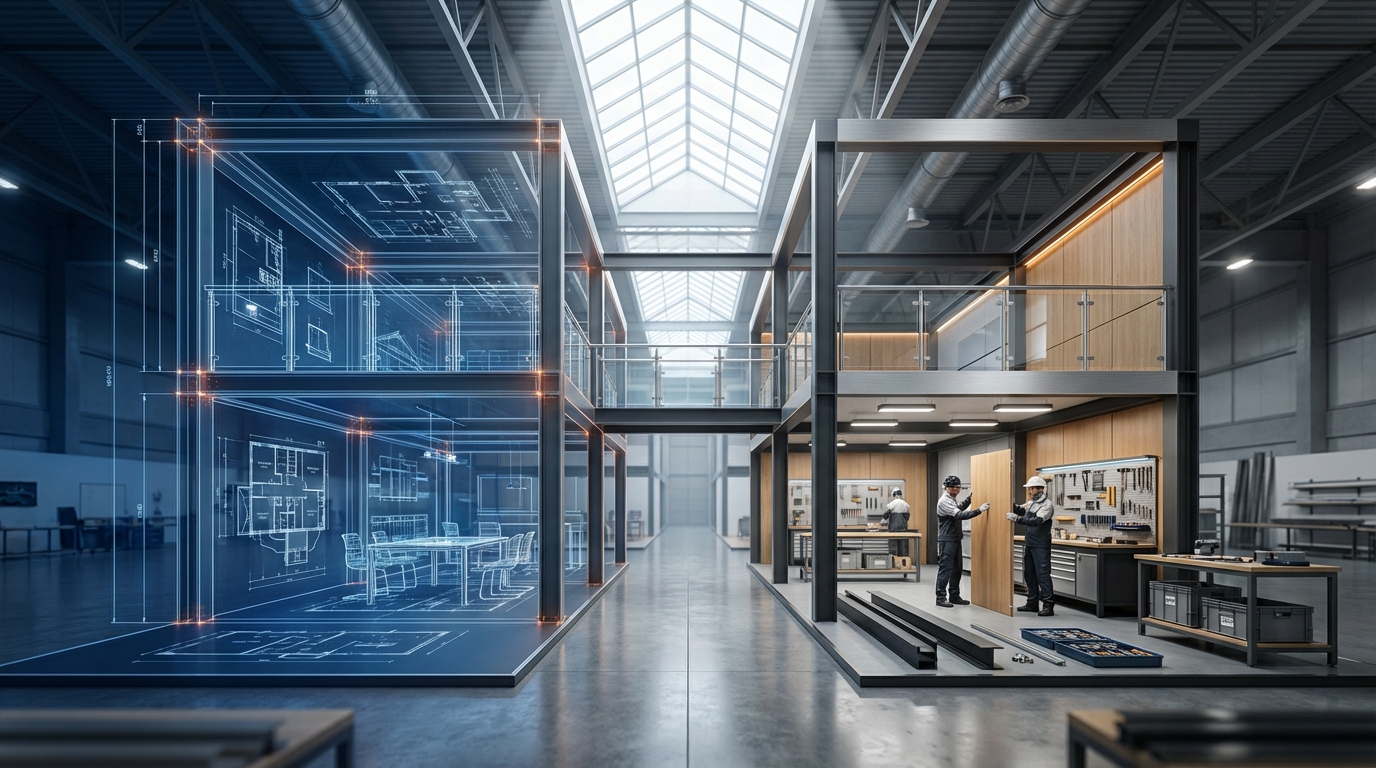
- Full-scale warehouse mock-up: We assemble the double-deck in our warehouse for a client review — testing stair placement, handrails, access ramps, transparency calculations and AV integration.
- Structural documentation & engineer liaison: We prepare and coordinate the engineer-signed calculations and submit them against the DWTC 60-day deadline.
- RAMS preparation: Risk assessments, method statements and installation sequences are prepared and approved before transport.
- Coordinated transport and site installation: Dedicated project manager on site, toolkits for contingency fixes and communication with DWTC inspectors to fast-track approvals.
This approach converts risk into scheduled activities so the stand arrives on time, installs smoothly and opens for business without DWTC holds.
Practical 60-day checklist and timeline for Dubai Derma exhibitors — for DWTC double deck stand builders
Follow this timeline against your booking date. We recommend using Burdak’s early-activation service to hit each milestone.
- Booking & deposit (T‑0): Confirm space and pay deposit. Secure show regulations and hall-specific height limits.
- Design submission (T+7–14 days): Produce concept 3D renders and preliminary layout for internal sign-off.
- Structural calc deadline (T‑60 days before build): Submit full engineered drawings and calculations to DWTC. Burdak prepares engineer-signed packs and RAMS.
- Mock-up review (T‑45 to T‑30): Full-scale warehouse mock-up and client walkthrough; revise and finalise details.
- Transport & logistics booking (T‑21): Confirm transport, storage and on-site crew schedules; order rigging and DWTC services.
- Pre-build checks (T‑7): Final materials check, palletise components, pre-stage install kit and contingency spares.
- Build week responsibilities: On-site Burdak team manages installation, coordinates inspector sign-offs and executes snagging.
- Emergency protocol: Burdak provides a dedicated emergency contact, on-site toolkits and rapid response to DWTC inspection queries.
FAQ — DWTC double deck stand builders at Dubai Derma
Q: What is the single-storey height limit at DWTC for Dubai Derma?
A: The standard single-storey limit is approximately 4m. Anything above becomes a Complex Structure and requires approvals.
Q: How high can a double-deck be?
A: Double-decks are commonly permitted up to ~6m, but this varies by hall. Confirm hall-specific limits when you book.
Q: What base-plate spec does DWTC require?
A: DWTC commonly requires base plates such as 400x400x12mm and disallows drilling into floor slabs; approved fixings or weighted base plates are used instead.
Q: When is the structural submission deadline?
A: Structural calculations and drawings are typically due ~60 days before build. Late submissions lead to fees and potential delays.
Q: What are typical fees for inspection or admin?
A: Inspection and administration fees commonly range between AED 1,000–2,600, with additional penalties or expedited-engineer costs if submissions are late.
If you are planning a double-deck for Dubai Derma 2026, contact us early. We combine rapid quoting, in-house fabrication and full-scale mock-ups to keep your build on schedule and compliant with DWTC rules.